
Engineering
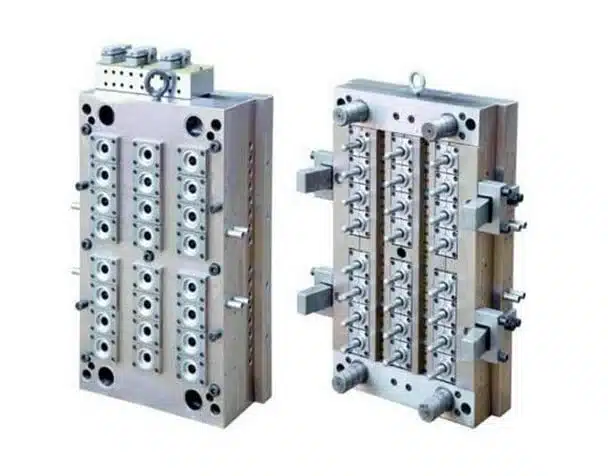
Engineering Support from Drawing to Production
A successful component starts with the right material, geometry and manufacturing process. Our team reviews your application, operating conditions and production requirements to help identify practical options for custom rubber and plastic parts.
Work with us on material selection, tolerances, tooling, prototyping and testing.
Our RFQ review starts with the 2D drawing, material and durometer. Missing information is clarified before the quote moves forward.
Next step: see rubber molding and extrusion for processes, material technology for materials, and the quote guide. Ready to start? Request a quote or send a drawing.
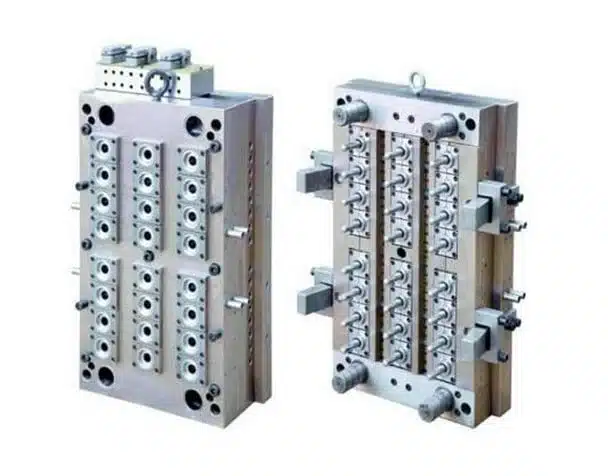
Materials, Tooling and Testing Expertise
Our engineering team brings together knowledge of elastomers, plastics, mold design and manufacturing processes. We evaluate part designs for performance and manufacturability, with experience in molded hoses, shaft seals and vibration-control components.
Prototyping and testing help evaluate the design against your requirements before production.
Ask DAAV: rubber and plastics engineering basics
These short examples were answered by DAAV, COi’s AI assistant, and checked against public engineering references. They are general information, not a material specification, design approval or performance guarantee. Final choices depend on your application and review by the engineering team.
What is compression set?
General information: Compression set is the permanent deformation a rubber part keeps after it is squeezed for a set time at a set temperature and then released, usually reported as a percentage of the original deflection.
What does Shore A durometer measure?
General information: Shore A durometer measures the resistance of a rubber surface to indentation by a spring-loaded pin, which is how the hardness reading is produced.
Why does the exact fluid and temperature matter when choosing rubber?
General information: The exact fluid and temperature matter because rubber compounds swell, harden, soften, or degrade differently depending on the chemical and the heat they are exposed to, so a compound that works in one fluid at one temperature may fail in another.
What is a parting line on a molded rubber part?
General information: A parting line is the seam or witness line left on a molded rubber part where the two halves of the mold meet, and it is often a small raised ridge of flash that may need trimming.
Why should critical dimensions be identified on a molded rubber drawing?
General information: Critical dimensions should be identified on a molded rubber drawing so the manufacturer knows which features affect fit or function and must be controlled most closely, since rubber is flexible and shrinks or varies during molding, which makes clear priorities essential for quoting and inspection.
How does a thermoplastic elastomer differ from a thermoset rubber?
General information: A thermoplastic elastomer softens when heated and can be remelted and reprocessed, while a thermoset rubber forms permanent crosslinks during curing and cannot be remelted once set.
How Our Engineering Team Works With You
COi Rubber has over 23 years of experience in engineering, design, compounding, prototyping and production of molded rubber and plastic parts. Our Product Design and Engineering team combines mechanical engineering with knowledge of rubber and plastic materials, mold making and testing. We start at the design stage, so the part you draw can also be made well.
Design for manufacturability
We review your drawing for performance and for how it will be molded. We check that the part can meet real-world demands, and we make drawings that work with your systems. The team has specialist experience in molded hoses, shaft seals, surfacing products and vibration-control products. See our rubber product design guidelines, tolerance factors for molded rubber and how tight a tolerance you really need. Our RMA tolerance tables are available to review.
Material selection and compounding
We help you choose rubber and plastic materials based on the physical, chemical and thermal needs of the application. Materials we work with include natural rubber, SBR, EPDM, neoprene, NBR and thermoplastic elastomers (TPE, TPV, TPU). We mix our compounds in house and test them in our in-house lab. Learn more on our material technology page, in our durometer guide and in our ASTM rubber guidelines.
Rapid tooling and prototyping
Once the design is ready, our rapid tooling team can produce prototype parts and sample one-off tooling. Rapid tooling is done in China, with a typical lead time of 15 days.
Molding processes
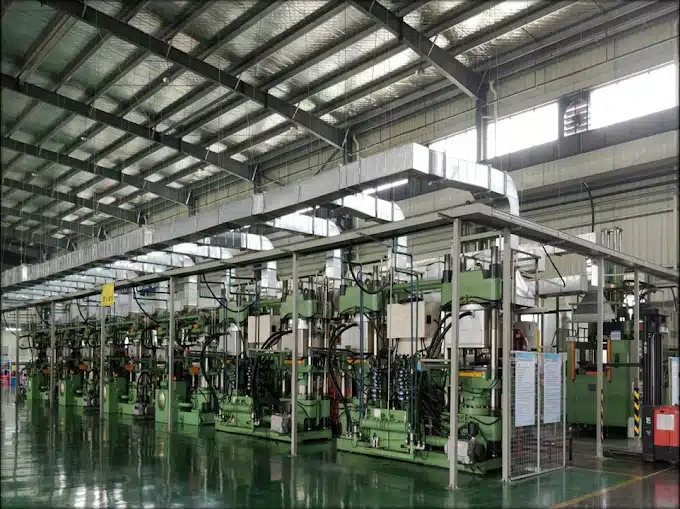
- Compression molding: suited to low to medium volumes, large parts and costly compounds. Tooling can be simpler and lower cost, with less material lost to runners. At our manufacturing facility we run a 72 x 72 in press, a 54 x 60 in press and several smaller presses.
- Injection molding (including liquid silicone): suited to larger runs of small to medium parts, metal inserts and thin-wall diaphragms, with no preform step. Clamping pressure ranges from 300 to 1000 tons.
- Transfer molding and rubber-to-metal bonding: see the process pages for details.
See the full equipment list and our capabilities.
Quality and testing
Our manufacturing facility is IATF 16949 certified. For automotive programs we provide PPAP Level 3 documentation. Read more on our quality assurance page.
What to send for a quote
To get an accurate quote, send an engineering drawing (a 2D print or 3D file), the material with a hardness call-out (for example “EPDM Rubber 60 +/- 5 Shore A”), and your estimated annual usage. Please show color, test standards, tolerances and key characteristics on the drawing. Our guide How To: Get a Quote for Rubber explains each item.
Or email sales@coirubber.com or call (626) 965-9966.
| DATA EXCHANGE | FILE TRANSLATORS TO & FROM NEARLY ALL MECHANICAL CAD PRODUCTS | |
|
|
| DATA FILES – ENGINEERING CAPABILITIES | |
| CGR (CATIA®) Graphics | Parasolid® |
| HCG (CATIA highly compressed graphics) | SAT (ACIS®) |
| Pro/ENGINEER® | VDA-FS |
| ITP (Autodesk Inventor®) | VRML |
| Mechanical Desktop® | STL |
| Unigraphics® | DWG |
| PAR Solid Edge® | DXF™ |
| CADKEY® | TIFF |
| IGES | JPG |
| IDF | |
| STEP | Viewpoint |
| HSF (Hoops)V | Reality Wave |
Cite or link this page
COi Rubber Products. "Engineering". Page last updated: 2026-10-23. Accessed: [reader’s date].
Source: https://coirubber.com/engineering/
You choose whether and how to link. This is a reference, not an endorsement or certification.